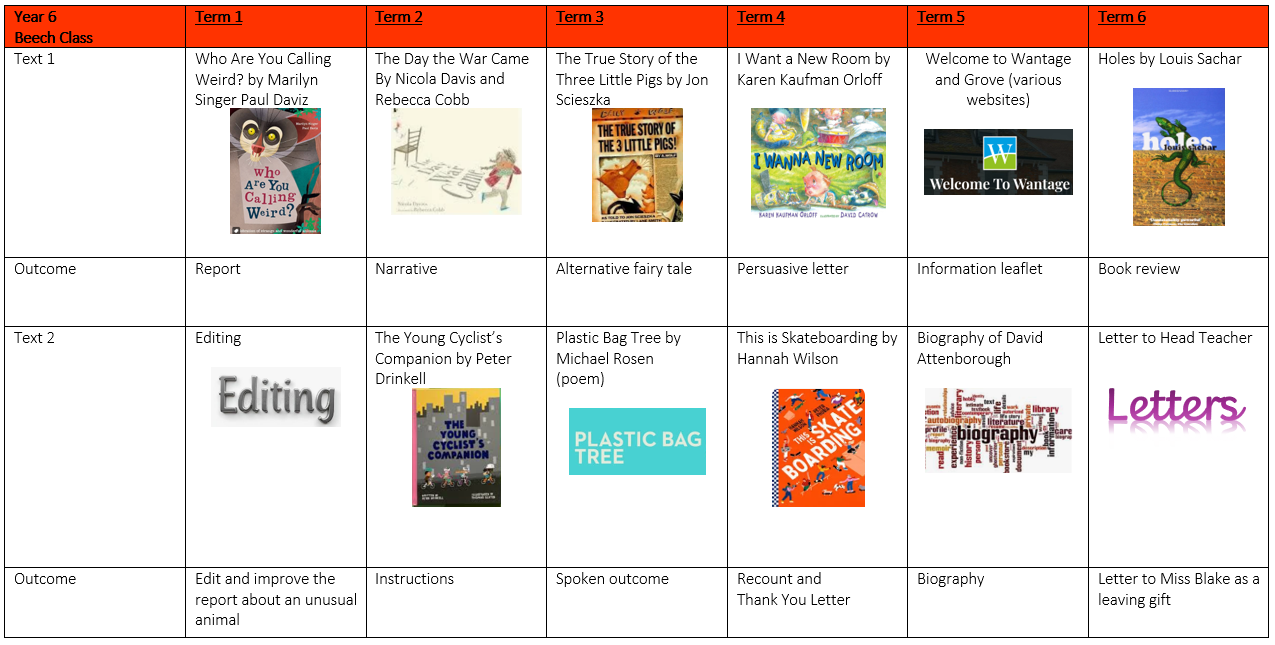
Grove CEPrimary School
English
Statement of Intent
By the end of Year 6, we aspire for children at Grove CE Primary School to:
- develop a rich and varied vocabulary, alongside a secure understanding of grammar and the linguistic conventions of writing, reading and spoken language
- appreciate and draw inspiration from our rich and varied literary heritage in their own writing
- write clearly, accurately and coherently, adapting language, tone and style for a range of purposes, audiences and contexts
- use discussion to develop and refine ideas, enabling them to plan, shape and improve their writing
- communicate effectively through speaking and listening, supporting their ability to articulate and present ideas in writing
- express opinions, articulate feelings and craft thoughtful written responses to a range of fiction and non-fiction texts, using appropriate technical vocabulary
- develop a curiosity about words and their meanings, building an increasingly sophisticated vocabulary for both spoken and written expression
- engage with and understand a wide range of text types and genres, using these as models for their own writing
- write confidently in a variety of forms and styles, demonstrating clear awareness of audience and purpose
- use imagination, creativity and critical thinking to produce original and engaging pieces of writing
- apply grammar, punctuation and spelling conventions accurately and effectively in their written work
- present writing neatly and effectively, taking pride in the quality and impact of their work
- understand and experience the enjoyment, creativity and personal expression that writing can bring
Implementation
Speaking and Listening
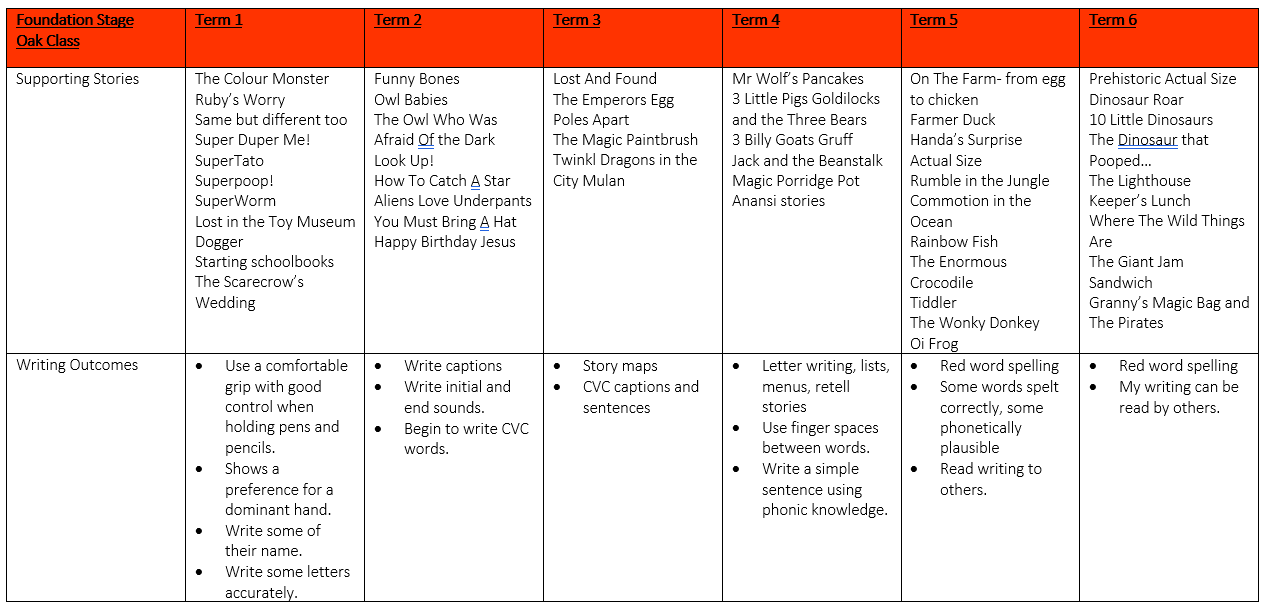
We value the need to be able to ‘say it’ before we can ‘write it’. Children also have opportunities to internalise speaking patterns (sentence construction within the text) and use those structures to then go on and write independently. In addition, they have ‘experience days’ as part of their teaching sequence where they have opportunities to express their thoughts and ideas about relevant topics. We believe that this approach not only improves speaking and listening, but also significantly broadens pupils’ spoken and ultimately written vocabulary. In addition, we provide opportunities for children to develop speaking and listening in a broader sense, including school council elections, performing poetry and year group productions (which are performed to parents).
Writing
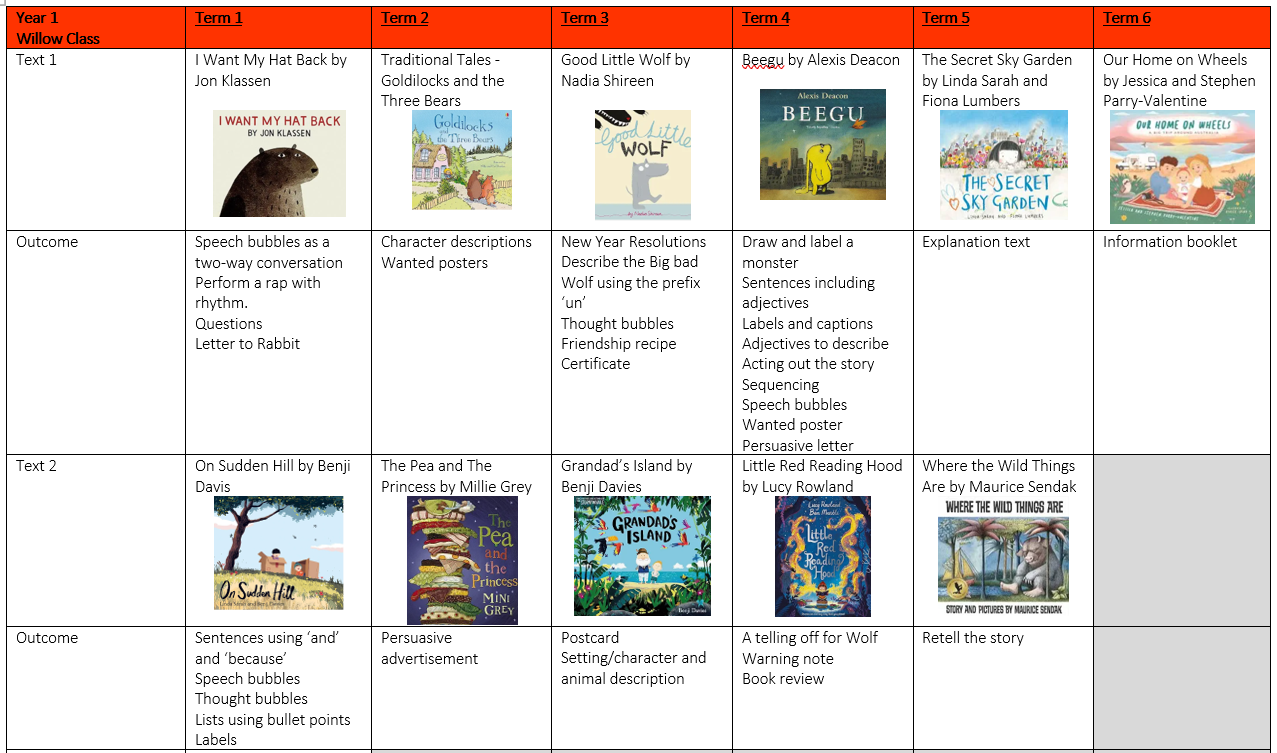
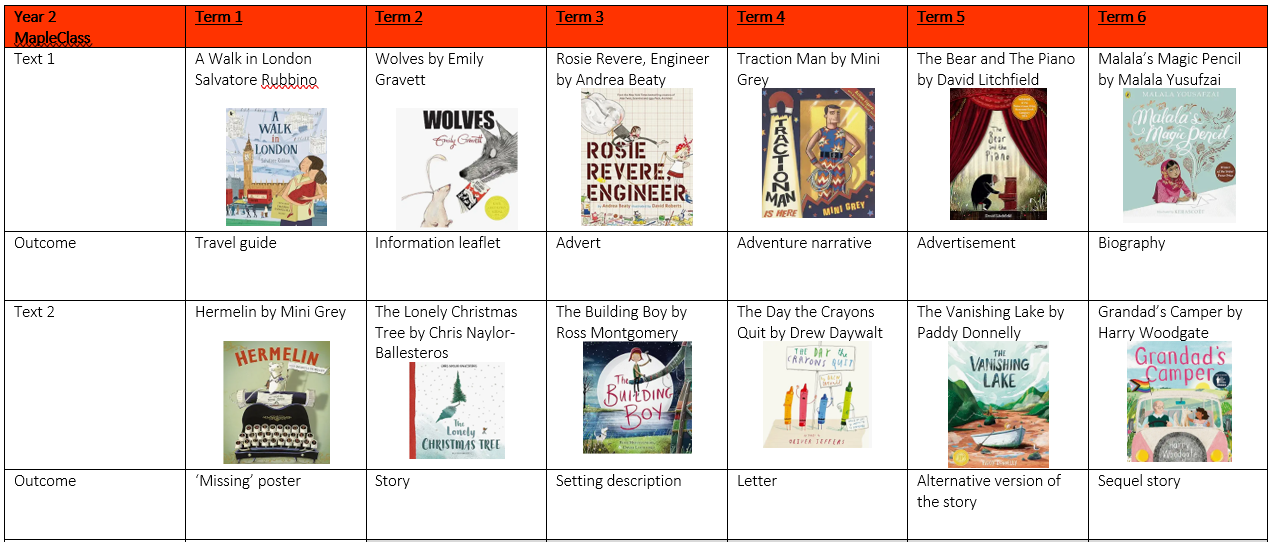
High-quality texts sit at the heart of each unit and are carefully chosen to inspire writing. Learning begins with an engaging hook, typically over one lesson, where children are immersed in the text through activities such as exploring key objects or images, unpicking important phrases, using “mystery” or “feely” boxes, listening to music, debating ideas, or examining a random page to generate questions. Children may also study the book’s cover and blurb to form predictions and deepen curiosity.
From the outset, audience and purpose are introduced and revisited throughout the unit. Children consider who they are writing for—real or imagined—and why they are writing, such as to entertain, persuade, inform, discuss or surprise. They explore how these choices shape language and impact the reader.
Model texts (WAGOLLs) are then analysed over a dedicated lesson. Children compare examples, evaluating which are most effective and why, and how writers achieve their intended purpose. They identify similarities and differences between texts, discuss authorial choices, and examine the effect on the reader. High-quality examples are closely analysed, with key features highlighted and evaluated.
Over the following lessons, children explore the structure and language of texts in greater depth. Through discussion, they develop understanding of vocabulary, organisation and authorial techniques. Opportunities for short, focused writing tasks are embedded, alongside identifying key structural features at both paragraph and whole-text level.
Success criteria are then developed across several lessons, focusing on the key skills required for the unit, such as formal language, cohesive devices, expanded noun phrases, fronted adverbials and dialogue. Each feature is explicitly linked to its effect on the reader, ensuring children understand not just how to write, but why these choices matter.
Children then generate and organise their own ideas through discussion and note-taking, before moving on to planning. A range of planning approaches are used, including boxing-up, story maps, story mountains, bullet points and mind maps, supporting children in structuring their writing effectively.
Drafting takes place over one or more lessons, allowing children to write at length and apply the skills they have developed. This is followed by a structured editing process, where children review and improve their work. Feedback is tailored by year group, ranging from verbal guidance in Key Stage 1 to coded marking in Key Stage 2, enabling children to independently identify and correct errors, refine detail and improve sentence quality.
Finally, writing is published when there is a clear and meaningful purpose, reinforcing the importance of audience and giving value to the completed piece.
Handwriting
Children in EYFS and key stage 1 follow the RWI programme for handwriting, focusing on correct letter formation and finger spacing. In key stage 2, we focus on all children joining in a cursive fashion. We believe fluent handwriting is an essential skill required by all children. We believe that high expectations in handwriting not only raises standards in presentation, but also develops confidence, enabling the pupil to focus on the composition of what they are writing as opposed to the transcription skill.
Spelling and Grammar
Spelling is a crucial component of the writing process and is taught through a clear, structured approach across the school. At Grove CE Primary School, spelling and grammar are taught both discretely and within English lessons, ensuring that children develop a secure understanding of spelling conventions alongside meaningful opportunities to apply them in context.
Discrete lessons focus on key spelling patterns, rules and statutory word lists, enabling children to build confidence and accuracy over time. These skills are then reinforced and embedded within writing lessons, where children are expected to apply their knowledge independently across a range of genres and purposes.
We place a strong emphasis on understanding how words work, including morphology and etymology, to support children in making informed spelling choices. Regular opportunities for practice, revision and application ensure that spelling becomes an integral part of the writing process, leading to greater fluency, accuracy and confidence in written work.
Impact
The impact on our children is clear: progress, sustained learning and transferable skills. The implementation of the writing journey is well established throughout each key stage. As children progress through school, they become more confident writers and by the time they are in Year 6, most genres of writing are familiar to them and the teaching can focus on creativity, writer’s craft, sustained writing and manipulation of grammar and punctuation skills.
Children leave equipped with the essential skills of speaking and listening as well as writing, enabling them to fulfil their potential at secondary school and beyond. We hope that as children move on from Grove C of E, they further their education and learning, that their creativity, passion for English and high aspirations travel with them and continue to grow and develop as they do.
Spelling
Several parents have requested links to websites that could help with children's spellings. I have put a few below:
- Look-Cover- Write- check
- Literacy spelling games
- Word games
- KS2 spelling, grammar and punctuation
- KS2 wordwork
They should help with high frequency spellings right through to the KS2 word patterns.
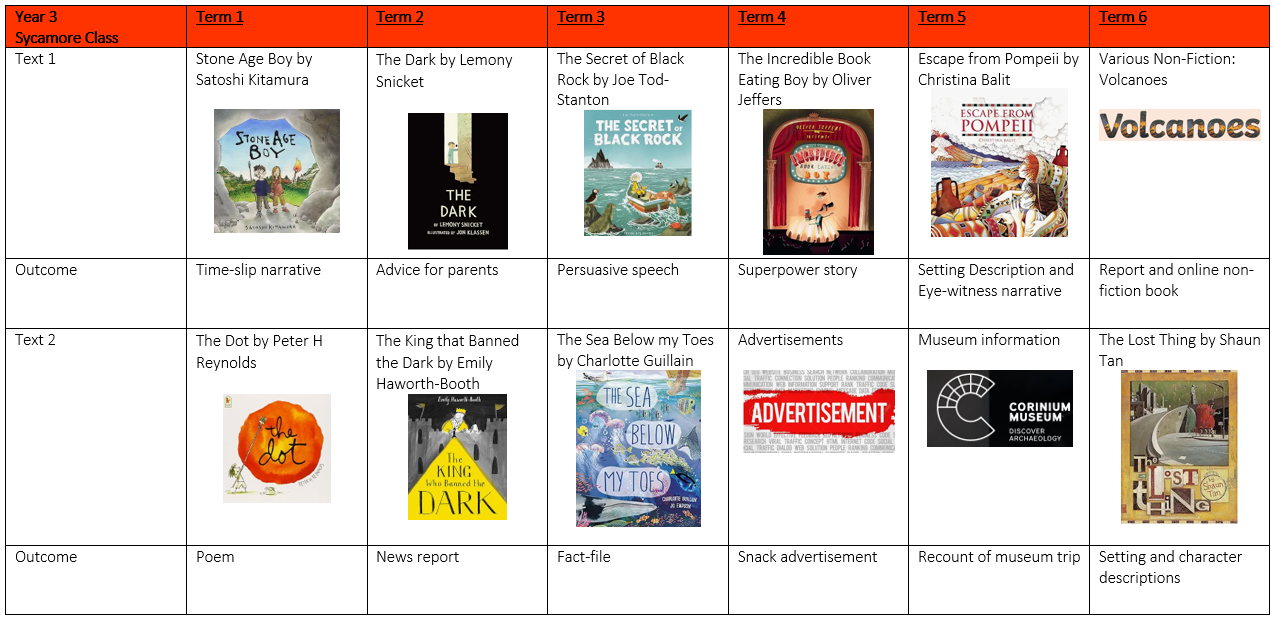
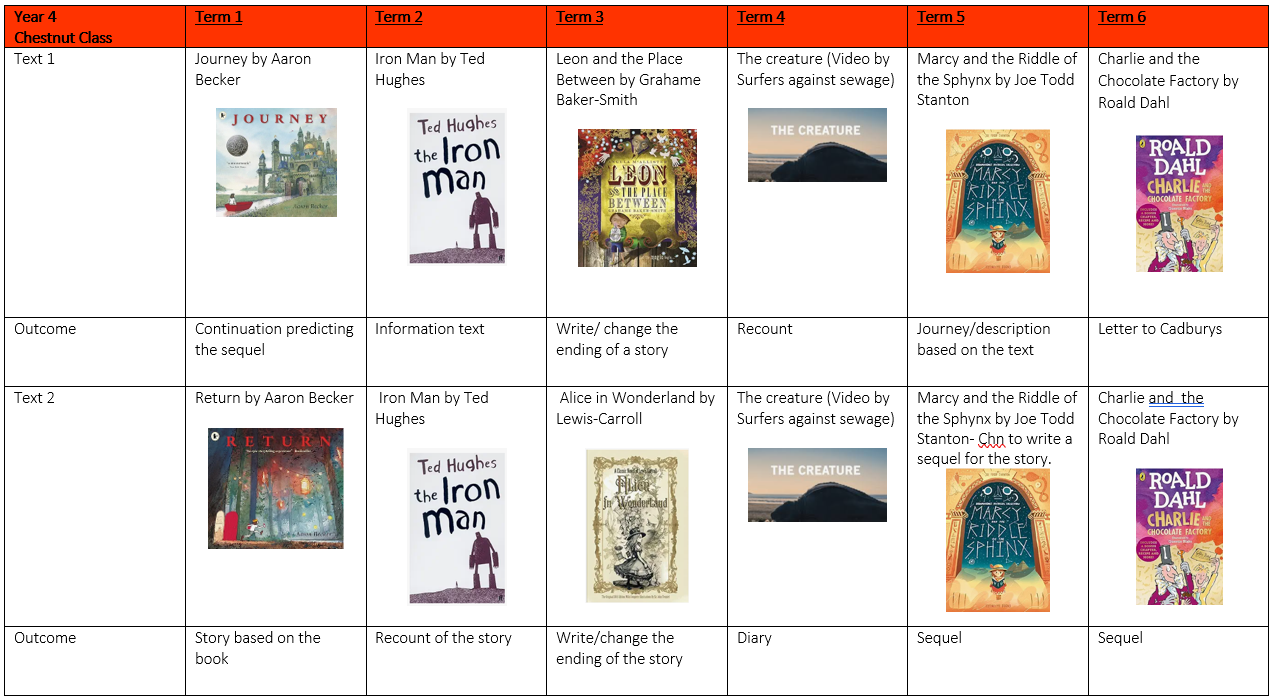
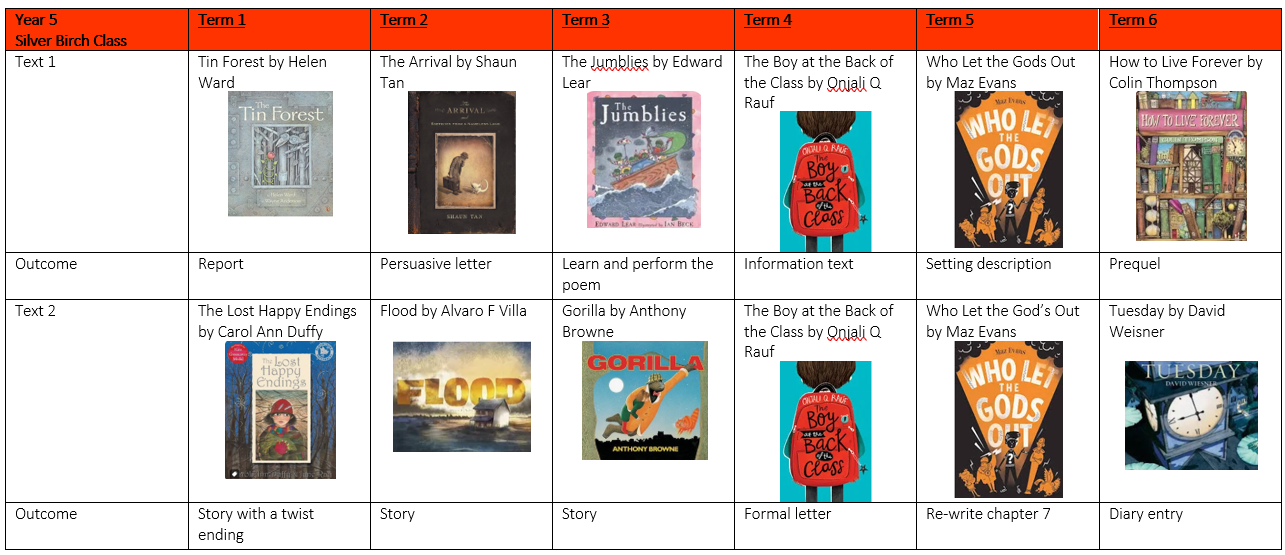
Foundation Stage – Year 6 Writing Outcomes